Jellicle Moon
Old Possum's Book of Practical CatsThe Jellicle Moon is the central time cue in the song of the Jellicle Cats: its appearance marks the shift from daytime repose to a night of collective dancing. Rather than giving the cats a calendar date or a clock hour, the poem makes the moon’s arrival the moment they wait for and the light by which their gathering takes place.
The Moon as a Signal
The moon is introduced as already shining brightly, alongside an invitation for Jellicle Cats to come out that night and for all to join them. Its role is therefore both temporal and social: it signals when the cats’ nocturnal activity belongs to begin, while the invitation makes that time a shared occasion rather than a private encounter. The song presents the Jellicle Moon not as incidental scenery but as the conspicuous sign by which the night’s gathering is recognized.
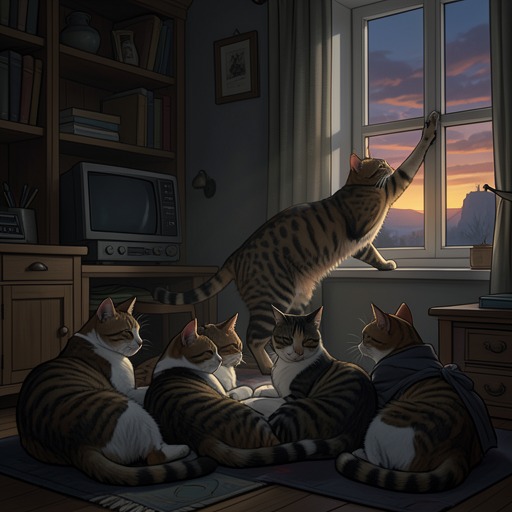
The cats also wait for the moon to rise. That phrasing makes its arrival something anticipated, not merely a condition already in place. The lyric then describes what happens until it appears: the cats make their toilette and take their repose. The moon’s rising thus divides the account into a period of preparation and a period when the gathering can proceed. The poem supplies no date, season, or exact hour for this transition; the meaningful measure of time is the moon’s appearance.
A Rhythm of Rest and Readiness
The song gives the waiting period a distinct daily setting. Jellicle Cats are quiet enough in the afternoon, when they reserve their dancing powers for dancing by the light of the Jellicle Moon. Their stillness is purposeful. The account acknowledges that an observer might think they have nothing to do, then recasts their rest as preparation for the Jellicle Moon and the Jellicle Ball. What looks like inactivity is presented as energy being kept for a particular time and use.
Toilette and repose reinforce this pattern: before the moon appears, the cats groom themselves and rest; when its light arrives, their stored dancing powers have their occasion. The song links ordinary bodily routines to a public performance without describing a transformation in the cats themselves. What changes is the time and activity assigned to them: quiet afternoon gives way to moonlit dancing, and waiting becomes participation.
The Jellicle Ball and Collective Performance
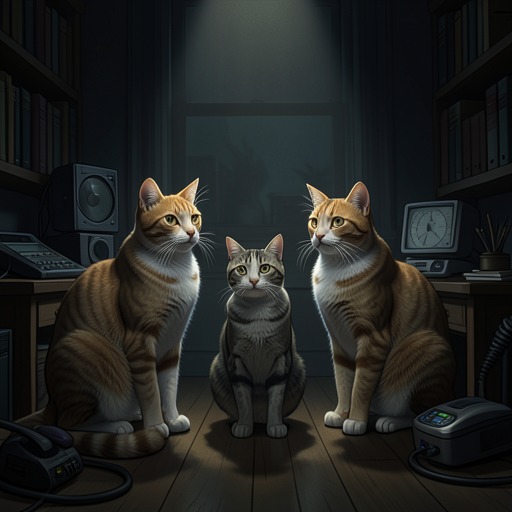
The Jellicle Moon’s importance is measured by what it makes possible. Jellicle Cats come out for the night and gather for the Jellicle Ball, where their dancing includes the gavotte and jig. The invitation to come one and all gives the event an inclusive, communal frame. The moon connects the cats’ separate periods of rest to a common occasion, and its light provides the setting for their shared dance.
The lyrics also place the moon within a repeated pattern of expectation and release. The cats wait for it to rise, rest until it appears, and conserve their powers for dancing by its light. The refrain’s return to the Jellicle Moon and the Jellicle Ball makes those words the endpoint toward which the earlier details of quietness and preparation have been moving. The moon is therefore not simply the background to a festive night: it is the recurring cue that gathers the song’s timetable, anticipation, and performance around one moment.
Meaning and Limits of the Time
The poem gives the Jellicle Moon a practical function while leaving its physical particulars unspecified. It does not explain the moon’s phases, identify a particular night, or assign it powers beyond shining and appearing. Its significance comes instead from the cats’ relation to it: they wait for its rise, arrange their repose around its arrival, and dance in its light. This keeps the image grounded in the song’s own schedule rather than turning it into an explanation of celestial or supernatural cause.
As a lyrical time-marker, the moon also shapes the song differently from a clock. The account offers no measured hour for the cats’ dance; it moves from afternoon quiet through grooming and rest toward the visible sign of night. That progression makes anticipation part of the scene. The Jellicle Moon gives the Jellicle Cats a shared rhythm—preparation, appearance, gathering, dance—and makes the Jellicle Ball the culmination of their waiting.